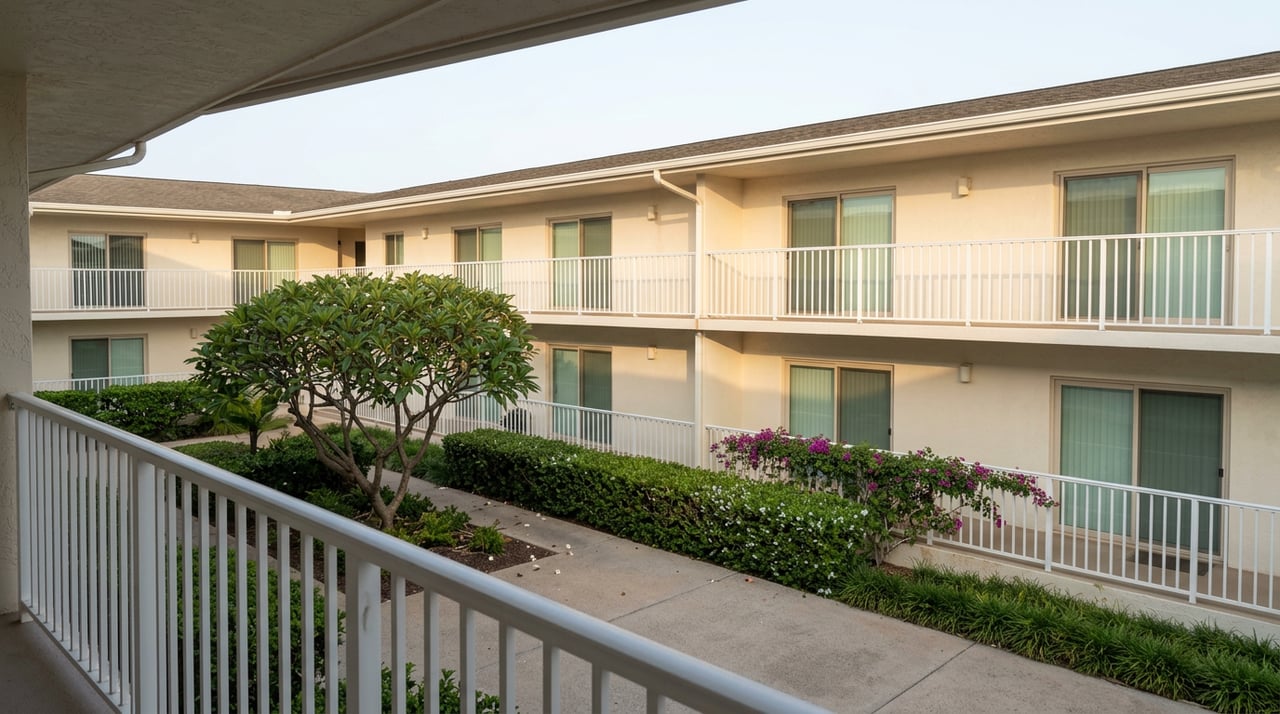
Kihei's Condo Market Has Two Prices for the Same View. The Difference Is Zoning.
September 17, 2026
September 17, 2026
Pull up two condo listings in Kihei this month. Same stretch of South Kihei Road, same distance to the sand, similar square footage, similar 2026 asking price per foot. One listing description says the unit is hotel-zoned and can be rented nightly with no restriction. The other says nothing about zoning at all, because the seller's agent knows that mentioning it might cost the sale.
That second unit is very likely sitting on Maui County's Minatoya List, and it is running against a clock that has nothing to do with the ocean view, the building's age, or the strength of its rental history. It has to do with a zoning designation from decades ago that Maui County spent most of 2025 and 2026 unwinding, one condo building at a time.
In 1989, Maui County amended its zoning code to exclude vacation rentals from apartment-zoned districts going forward. But the county grandfathered condos that were already built or approved, and a deputy corporation counsel named Richard Minatoya recommended that the change not apply retroactively to units completed before March 5, 1991. That opinion is the reason roughly 7,200 condo units across Maui County have operated as legal short-term rentals for more than three decades despite sitting on land zoned for long-term apartments, not hotels.
On December 15, 2025, that exemption started closing. The Maui County Council passed Bill 9 on a 5-3 vote, and Mayor Richard Bissen signed it into law the same day as Ordinance 5909. County officials excluded roughly 1,100 units from the list for reasons like timeshare status or existing variances, leaving about 6,100 apartment-zoned condos across Maui and Molokai on a fixed countdown. West Maui properties lose the legal right to rent nightly on January 1, 2029. Everywhere else in the county, including Kihei, the deadline is January 1, 2031.
None of this touches hotel-zoned buildings, resort condos, timeshares, or bed-and-breakfast permits. A unit's zoning designation, not its neighborhood or its rental history, decides which side of the line it falls on.
South Maui holds the largest concentration of Minatoya List units of any region in the county, and within South Maui, Kihei carries most of that inventory. That is not a minor detail for anyone comparing condo listings there. It means a buyer weighing two similarly priced Kihei units is often, without realizing it, weighing a permanent asset against a temporary one.
Some of Kihei's largest and most recognizable condo complexes are apartment-zoned Minatoya properties now working through the county's rezoning process. Kamaole Sands, a 440-unit complex near Kamaole Beach Park, appears in the county's rezoning resolutions as a building the council is considering for the new H-4 hotel classification. Maui Sunset and Kauhale Makai show up on the same working list. None of these buildings has secured a final rezoning outcome. Until one does, the January 1, 2031 deadline stands as written.
Compare that to the C building at Kihei Akahi, which listing agents market specifically as hotel-zoned inventory with legal short-term rental rights and no Bill 9 exposure. That detail alone shows the line does not even respect a single complex's name. Two units at Kihei Akahi can carry two different rental futures depending on which building within the complex holds the deed.
| Kihei Condo Complex | Zoning Status | Rental Rights Timeline |
|---|---|---|
| Kihei Akahi, C building | Hotel-zoned | No Bill 9 deadline, nightly rental continues |
| Kamaole Sands | Apartment-zoned, named in county rezoning resolutions | Nightly rental must stop January 1, 2031 unless rezoning succeeds |
| Maui Sunset | Apartment-zoned, named in county rezoning resolutions | Same January 1, 2031 deadline pending rezoning outcome |
| Kauhale Makai | Apartment-zoned, named in county rezoning resolutions | Same January 1, 2031 deadline pending rezoning outcome |
| Waiohuli Beach Hale | Apartment-zoned, owner has petitioned for rezoning citing shoreline exposure | Deadline stands unless added to an approved resolution |
Estimates of how far apartment-zoned condo prices have already pulled back vary by source, with figures ranging from roughly a quarter to nearly half off their 2022 to 2023 peak as of mid-2026, while hotel-zoned buildings in the same window have generally held their value. The spread in those estimates matters less than the direction. The market is already pricing the zoning line in, even before a single unit hits its actual deadline.
The county did leave a door open. Bill 88 created two new hotel zoning classifications, H-3 and H-4, that would let qualifying apartment-zoned buildings convert and keep their rental rights permanently. The idea came out of a county Temporary Investigative Group that flagged roughly 4,500 units, including some in Kihei, as candidates.
That door is narrower than it sounds. In February 2026, the Maui Planning Commission voted to recommend against creating the new hotel zones at all, with commissioners arguing the county and the council had already decided, through Bill 9 itself, that these units should return to long-term housing. The council moved forward anyway, passing Bill 88 by a 7-2 vote on June 19, 2026, despite that recommendation and similar ones from planning commissions on Lanai and Molokai.
Passing Bill 88 did not automatically rezone anything. The actual process runs building by building through numbered council resolutions, and as of August 2026 the council was still debating whether to add more properties to the list, including several Kihei buildings near the shoreline. Waiohuli Beach Hale's owner told council members the complex sits in a state-mapped sea level rise exposure zone and argued that made it a poor candidate for long-term housing, a case that council members are still weighing alongside similar petitions for other coastal complexes. For a buyer, that means a building's current appearance on a rezoning resolution is not a guarantee. It is a pending case, and pending cases can be denied.
A separate risk runs underneath all of this. Property owners filed the first legal challenge to Bill 9 within days of it becoming law, arguing in a case filed in Second Circuit Court that the county is taking a legally established property right without compensation. More than one suit has since followed. None of them has produced a court order blocking enforcement. The amortization dates in Bill 9, January 1, 2029 for West Maui and January 1, 2031 for Kihei and the rest of the county, remain the operative deadlines unless and until a judge says otherwise.
For a buyer, the honest way to treat this is as background risk, not a plan. Litigation could eventually change the timeline. It has not changed it yet, and there is no way to know how long that might stay true.
A listing that says "legal short-term rental" is describing today's status, not a guarantee about 2031. Before treating a Kihei condo as a rental investment, it is worth confirming a few things directly rather than taking a listing description at face value.
None of this makes an apartment-zoned Kihei condo a bad purchase. Plenty of buyers want a personal residence, a long-term rental, or a future retirement home, and Bill 9 does not restrict any of those uses. It only restricts nightly rental in unrezoned apartment-zoned buildings after the deadline. The mistake is buying one of these units while pricing it as if that restriction does not exist.
Does the rental income just stop on January 1, 2031? For Kihei's Minatoya List units, yes, unless the building secures an approved rezoning before then. Nothing changes automatically before that date, but nothing extends past it either without a completed rezoning or a court ruling that alters the timeline.
If I only want a Kihei condo to live in, does any of this affect me? No. Owner occupancy and standard long-term rental are unaffected by Bill 9 regardless of a building's zoning status. The law targets transient nightly rental in apartment-zoned buildings, not residential use.
Can I just trust a listing that says "hotel-zoned"? Verify it against the parcel's actual zoning record and, if relevant, the county's Minatoya List and rezoning resolutions rather than relying on marketing language alone. Zoning designations are public record, and confirming them before you write an offer is a five-minute check that can save a much longer conversation later.
Zoning has quietly become the most important number in a Kihei condo purchase, more important than square footage or view, and it will not show up in a portal search filter. If you are comparing Kihei condos and want help reading a specific building's zoning history and where it stands in the county's rezoning process, Emerald Club Realty can walk through it with you before you make an offer, not after.
The possibilities in Maui real estate are boundless, whether you are looking to settle permanently in a Maui home or perhaps part time in a condo that you can rent out for the rest of the year. If you want to build, you will find a myriad of beautiful vacant land listings to choose from.